

Paediatric Occupational Therapist Near Me in Melbourne: Building Confidence & Independence

Looking for a paediatric occupational therapist near me in Melbourne?
You’re not alone. Many parents are unsure whether their child’s challenges are “normal” or could benefit from support. An OT for kids can assess and strengthen skills that build independence, resilience, and emotional wellbeing.
Our child occupational therapists support kids with:
- Fine and gross motor delays (e.g., handwriting, balance)
- Sensory sensitivities and regulation issues
- Emotional outbursts and frustration tolerance
- Self-care challenges (toileting, dressing, eating)
- School readiness and classroom participation
At Back On Track Psychology, we offer
paediatric occupational therapy service in Melbourne
that are playful, practical, and parent-inclusive.
Tip: Searching “best occupational therapist near me for kids Melbourne”? Choose someone experienced in play-based, sensory-informed approaches.
Learn MoreBest Melbourne Occupational Therapist Near Me: OT Support for Mental Health & Daily Living

When you think of occupational therapy, you might picture physical rehab. But did you know that some of the best Melbourne occupational therapists also work with adults facing mental health or neurodivergent challenges?
At Back On Track Psychology, our Melbourne OT team helps adults manage:
- Executive functioning issues (time management, planning)
- Burnout and sensory regulation
- ADHD and autism-related challenges
- Return to work or study support
- Developing healthy routines for daily living
Our Melbourne OTs near you blend evidence-based strategies with compassionate coaching, helping adults live more independently and meaningfully.
Tip: Search “occupational therapist near me Melbourne adult” and look for OTs who specialise in mental health and neurodivergence for the best fit.
Learn MorePaediatric Speech Pathologist in Melbourne: What to Look for and When to Start
If you’re looking for paediatric speech pathologist in Melbourne or Googling “speech pathologist in Melbourne for kids,” chances are you’re concerned about your child’s communication development. Early support from a qualified speech pathologist in Melbourne can make a world of difference in your child’s language, confidence, and learning.
At Back On Track Psychology, our speech pathologists support children with:
- Delayed speech or limited vocabulary
- Difficulty forming sentences or following directions
- Trouble pronouncing certain sounds (e.g., “r,” “l,” “th”)
- Stuttering or speech fluency challenges
- Social communication difficulties
We collaborate closely with parents, educators, and allied health teams to deliver tailored support. Our clinics are child-friendly and accessible across Melbourne.
Tip: If you’re searching for the “best speech pathologist near me” in Melbourne, ask about qualifications in early language development and parent collaboration.
Learn MoreBest Speech Pathologist Near Me in Melbourne: Help With Communication, Voice & Confidence
Searching for a speech pathologist near me in Melbourne an adult? You may be surprised to learn that speech therapy isn’t just for kids. Adults seek out speech pathologists in Melbourne for a range of reasons, from communication confidence to voice issues and rehabilitation.
At Back On Track Psychology, our adult speech pathologists help with:
- Stuttering and speech fluency issues
- Voice disorders and vocal fatigue
- Speech changes after stroke or brain injury
- Communication challenges related to autism or ADHD
- Public speaking anxiety and articulation concerns
We offer flexible appointments in Melbourne and telehealth sessions, making it easy to find a speech therapist near you.
Pro tip: When searching “speech pathologist near me for adults,” include your goals (e.g., improve speech clarity, voice training) to find the best fit.
Learn MoreChild Psychologist Near Me in Melbourne: When and Why to Seek Help
Wondering if your child needs support? You’re not alone. Many families Google terms like “child psychologist near me in Melbourne” or “best psychologist Melbourne for kids” when facing emotional or behavioural challenges.
At Back on Track Psychology, we help children aged 3 to 12 build emotional resilience, social skills, and healthy coping strategies. Our Melbourne child psychologists work closely with families to understand each child’s unique needs.
Signs your child might benefit from seeing a psychologist:
- Frequent meltdowns or trouble regulating emotions
- Social difficulties at school or with peers
- Ongoing anxiety or excessive worries
- Difficulty adjusting to changes (e.g., new sibling, school)
- School refusal or sleep issues
Our friendly psychologists near you in Melbourne offer a warm, child-centred approach. We use play-based therapy, CBT, and emotion coaching to help your child thrive.
Tip: Searching for “best child psychologist near me” in Melbourne? Ask about experience with your child’s specific challenges and therapy style.
Learn MoreHow to find Best Melbourne Psychologist: Support for Anxiety, Burnout & Depression
If you’re searching for the best Melbourne psychologist, you’re likely feeling overwhelmed, stuck, or unsure where to turn next. Whether you’re facing anxiety, burnout, or depression, speaking with an experienced psychologist in Melbourne can be the first step toward healing.
At Back On Track Psychology, we have psychologist who specialise in adult mental health, offering personalised therapy to help you get your life back on track. Our experienced team of Melbourne psychologists understands that therapy isn’t one-size-fits-all. We match you with the right clinician for your unique goals.
Common reasons adults seek therapy include:
- Chronic stress and workplace burnout
- Generalised anxiety and panic attacks
- Low mood, depression or a sense of hopelessness
- Sleep difficulties
- Life transitions (divorce, grief, career change)
Whether you’re looking for a psychologist near me in Melbourne’s northern suburbs or prefer Telehealth, we offer flexible appointment options to suit your lifestyle.
Tip: Search “Melbourne psychologist near me” and include your mental health concern (e.g., anxiety, burnout) to find the most relevant support.
Learn MoreFamily Therapy
 Family therapy is a type of psychotherapy that involves working with families to address and resolve issues affecting their dynamics and relationships. This form of therapy is designed to improve communication, resolve conflicts, and foster understanding between family members. It is particularly helpful when family members are experiencing challenges related to behavioural issues, mental health struggles, or life transitions, such as divorce, illness, or the loss of a loved one. Click here to contact us.
In family therapy, the therapist helps to create a safe and neutral environment where all members can express their feelings and concerns. The therapist may use a variety of therapeutic approaches, such as systems theory, to examine the family rather than focusing solely on individual behaviours. This perspective allows the therapist to identify patterns of behaviour and communication that might be contributing to family conflict or emotional distress.
A key component of family therapy is improving communication skills among family members. Often, misunderstandings or unspoken tensions can lead to a breakdown in relationships, and therapy provides a platform for family members to speak openly, listen actively, and empathize with each other. This process helps build stronger connections and mutual respect, which can lead to more harmonious family interactions.
Family therapy may involve the entire family or focus on specific individuals depending on the issues at hand. The therapist works to address the needs of the family while also considering the unique needs of individual members. Sessions can help families develop coping strategies, set boundaries, and find solutions to conflicts that improve their overall functioning and emotional well-being. The goal is not just to resolve immediate issues, but to equip families with the skills and tools needed to handle future challenges together in a healthier way.
Learn MoreCouples Therapy
 Couples therapy is a form of psychotherapy that aims to help couples address and resolve conflicts, improve communication, and strengthen their emotional connection. It typically involves both partners working together with a trained therapist who guides them through discussions, encourages understanding, and provides strategies to improve their relationship dynamics.
In couples therapy, the therapist provides a neutral space where both partners can openly express their feelings, thoughts, and concerns without fear of judgment. The therapist uses various therapeutic techniques, such as active listening, conflict resolution skills, and cognitive-behavioural interventions, to help the couple identify the underlying issues affecting their relationship. These issues might range from communication problems and emotional disconnection to infidelity or financial stress.
One of the key goals of couples therapy is to help partners understand each other’s perspectives and learn healthier ways to resolve conflicts. By improving communication skills, couples can work through disagreements in a more constructive manner, reducing the likelihood of misunderstandings and resentment. The therapist also helps the couple explore their individual needs and desires, ensuring that both partners feel heard and respected.
Therapy sessions typically involve both partners attending together, although individual sessions may also be recommended to address personal concerns that might affect the relationship. The length of therapy varies depending on the couple’s goals and the complexity of the issues at hand, with some couples benefiting from just a few sessions while others may require long-term support. Ultimately, couples therapy seeks to empower both individuals to contribute positively to the relationship and develop the tools necessary for a healthier, more fulfilling partnership. Click here to reach out to us.
Learn More
Exposure Response Prevention (ERP) Therapy
 Exposure Response Prevention (ERP) is a well-established treatment primarily used to help individuals with obsessive-compulsive disorder (OCD) and certain anxiety disorders. It is a form of cognitive-behavioural therapy (CBT) that focuses on exposing individuals to the thoughts, images, or situations that trigger anxiety or obsessive fears, while simultaneously preventing the compulsive behaviours that the individual typically uses to reduce that anxiety. The goal of ERP is to break the cycle of obsession and compulsion by teaching individuals that their anxiety will diminish over time without the need to engage in compulsive actions.
The process of ERP begins with identifying specific triggers that cause anxiety or obsessive thoughts. Once these triggers are recognized, the therapist works with the individual to create a hierarchy of exposures, starting with less anxiety-provoking situations and gradually moving to more challenging ones. The key component of ERP is that during each exposure, the individual is encouraged to resist the urge to perform compulsive behaviours or rituals. By doing so, the individual learns that their anxiety will naturally decrease, and that the feared outcomes often don’t happen, which helps reduce the power of the obsessive thoughts over time.
ERP is typically conducted in a structured and supportive environment, where the therapist provides guidance and encouragement throughout the process. As individuals progress through the exposures, they gain confidence in their ability to tolerate anxiety without relying on compulsions. Over time, this results in a significant reduction in the intensity of obsessive thoughts and compulsive behaviours. ERP has proven to be one of the most effective treatments for OCD and related anxiety disorders, offering individuals the tools to regain control over their fears and improve their quality of life. Click here to reach out to us.
Learn More
Psychodynamic Psychotherapy
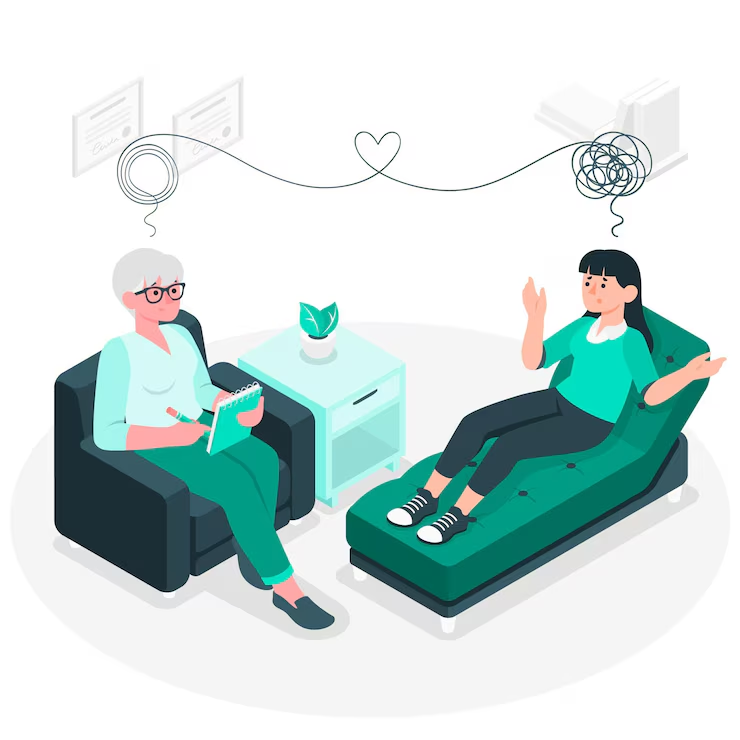
 Psychodynamic Psychotherapy is a therapeutic approach that focuses on exploring unconscious thoughts, feelings, and past experiences to understand how they influence current behaviours and emotions. It is based on the idea that unresolved conflicts from early life, often stemming from childhood relationships, shape patterns of thinking and acting in adulthood. The therapy aims to bring these unconscious patterns into awareness, allowing individuals to gain insight, process unresolved emotions, and develop healthier ways of coping. It typically involves a longer-term, deeper exploration of emotional and relational issues, with the goal of improving self-awareness and emotional regulation. Click here to reach out to us.
- Psychodynamic Psychotherapy is a form of talk therapy rooted in the principles of psychoanalysis. It focuses on exploring the unconscious mind and understanding how past experiences, particularly early childhood events, shape current thoughts, feelings, and behaviours. The therapy emphasizes the role of unresolved conflicts, emotional trauma, and repressed memories in influencing mental health and interpersonal relationships. By bringing these unconscious processes into conscious awareness, psychodynamic therapy aims to help individuals understand and resolve deep-seated emotional issues that may be contributing to their difficulties.
- In Psychodynamic Psychotherapy, the therapist works with the client to uncover the underlying psychological dynamics that may be influencing their behaviour. This often involves exploring patterns in the client’s relationships, recurring emotional conflicts, and defence mechanisms (such as repression or denial) that protect them from painful feelings. The therapeutic relationship itself is also an important focus, with the therapist acting as a supportive figure who helps the client gain insight into their emotional world, including any unconscious projections or transference (when the client projects feelings about past relationships onto the therapist).
- The goal of psychodynamic therapy is to promote self-awareness and emotional growth by helping clients understand how their past experiences influence their present behaviour and relationships. Over time, individuals can gain a deeper understanding of their inner conflicts, leading to healthier coping mechanisms, improved emotional regulation, and more fulfilling relationships. Psychodynamic Psychotherapy can be particularly effective for those with complex or longstanding emotional issues, such as depression, anxiety, and personality disorders.